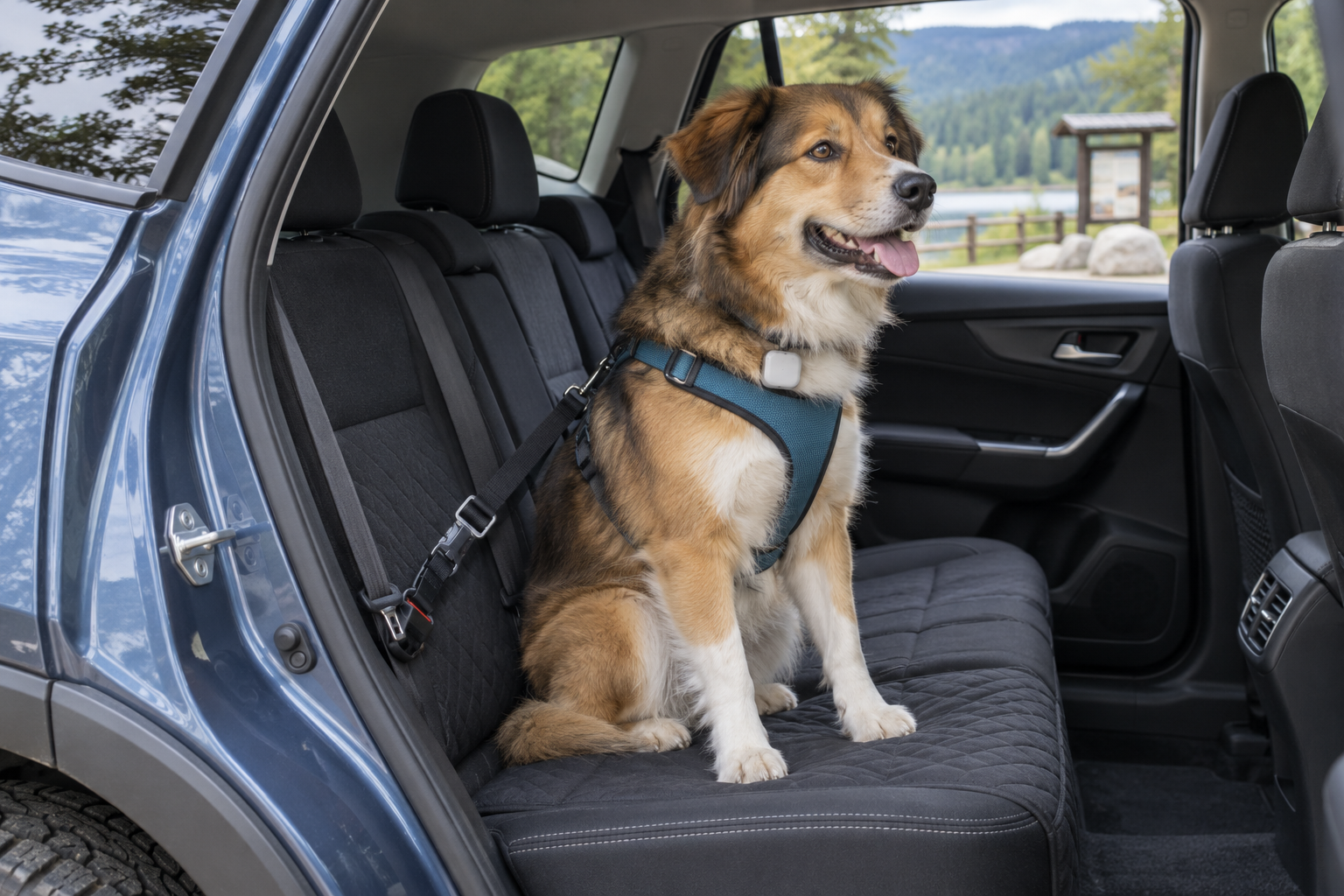
A loose dog can distract a driver, move around the cabin, or be thrown forward in a sudden stop. A car harness cannot make travel risk-free, but a well-fitted restraint keeps the dog in a more predictable position and reduces wandering. The difficult part is that “crash tested” is not one universal standard. Test protocols, dog weights, tether designs, and pass criteria differ.
The short version
- Best independent certification: Sleepypod Clickit Range. It received a five-star certification from the Center for Pet Safety after the organization’s November 2024 testing.
- Best for a clean, direct seat-belt connection: Ruffwear Load Up. The vehicle belt passes through the harness loop, avoiding a separate tether, and Ruffwear publishes its own dynamic test details.
- Best adjustable value: Kurgo Enhanced Strength Tru-Fit. Five adjustment points, steel nesting buckles, and an included short tether make it flexible, though the extra hardware takes time to fit correctly.
How we evaluated the claims
We looked for a published test method, stated test weights, restraint geometry, adjustment range, and clear vehicle instructions. Independent certification received more weight than a manufacturer’s own test. We also separated “the product was tested” from “the product passed an independent protocol.” FieldPaw did not run crash tests and does not promise that any harness will prevent injury.
Our three picks
Sleepypod Clickit Range: best independent certification
The Clickit Range uses a three-point connection intended to manage movement across the dog’s torso. The Center for Pet Safety lists it as a five-star certified harness from its November 2024 round of testing, and Sleepypod describes testing with accredited laboratories at 30 mph. Sizes cover dogs up to the manufacturer’s stated 110-pound limit.
Best for: owners who put the most weight on independent certification. Watch-outs: careful measuring is non-negotiable. A certified design does not help if the chest panel sits incorrectly or the straps are loose. This is a vehicle restraint first; check the maker’s instructions before treating it as an everyday walking harness.
Ruffwear Load Up: best direct seat-belt connection
Ruffwear routes the vehicle’s seat belt through an integrated loop, so there is no separate extension tether to lengthen the dog’s travel. The company publishes dynamic sled-test information using 25-, 45-, and 75-pound canine mannequins under a 30 mph frontal-impact condition based on the child-restraint standard FMVSS 213.
Ruffwear also states plainly that the Load Up was not tested to the Center for Pet Safety protocol and would not meet that organization’s excursion limits. That candor makes comparison easier, but it is not an independent certification. Best for: drivers who want a simple belt path and a padded harness for repeated trips. Watch-outs: confirm that your vehicle belt can route as shown and that the dog can sit or lie down without twisting the harness.
Kurgo Enhanced Strength Tru-Fit: best adjustable value
Kurgo’s enhanced-strength model uses all-steel nesting buckles, five adjustment points, and a broad chest pad. Kurgo publishes test documentation for dogs up to 75 pounds and includes a 10-inch seat-belt tether. The harness can also be used for walking, which is handy during rest stops.
Best for: households that want one adjustable harness for the car and short walks. Watch-outs: the tether adds another connection point and can be misrouted. Use only the supplied configuration described by Kurgo, keep it short, and never attach a vehicle restraint to a collar.
Best adjustable value
Kurgo Enhanced Strength Tru-Fit Dog Car Harness
Best for: Households that want one adjustable harness for vehicle restraint and short walks during stops.
Why it made the guide
- Five adjustment points and a broad chest pad support a close fit.
- All-steel nesting buckles and an included 10-inch seat-belt tether.
- Kurgo publishes test documentation for dogs up to 75 pounds.
Pros
- Adjustable across several points.
- Can be used for short walks as directed by the manufacturer.
- Included vehicle tether.
Cons
- Extra hardware takes time to fit correctly.
- The tether creates another connection point that can be misrouted.
At-a-glance comparison
| Harness | Evidence | Vehicle connection | Main tradeoff |
|---|---|---|---|
| Sleepypod Clickit Range | CPS five-star certification | Three-point system | Fit and setup require care |
| Ruffwear Load Up | Manufacturer-published dynamic testing | Vehicle belt through harness loop | Not CPS certified |
| Kurgo Enhanced Strength Tru-Fit | Manufacturer-published testing to 75 lb | Included short tether | More hardware and adjustment |
Fit is part of the safety system
Measure the chest where the manufacturer instructs, not where another brand’s chart told you to measure. Adjust the harness with the dog standing. You should be able to check the fit without the chest panel sliding to one side. After the first short drive, inspect every strap again; thick coats and relaxed posture can reveal slack that was not obvious indoors.
Road-trip habits that matter
- Restrain the dog in the rear seat or cargo area exactly as the vehicle and harness makers direct.
- Keep the restraint short enough to limit forward movement but long enough for the position the maker allows.
- Do a few five-minute practice drives before a long trip.
- Check buckles, webbing, and stitching after any hard stop or collision; replace the harness if the manufacturer advises it.
- Carry water and schedule breaks rather than letting a dog roam while the vehicle is moving.
Frequently asked questions
Is there a federal crash standard for dog harnesses?
There is no single government standard for consumer pet restraints comparable to the rules for human seat belts. That is why it is important to read the exact test method rather than relying on the words “crash tested.”
Can I clip a seat-belt tether to my dog’s collar?
No. A sudden load concentrated on the neck can cause severe injury. Use the attachment point and harness configuration specified by the restraint manufacturer.
Can a dog ride in the front seat?
The rear seat is generally the more practical location because front airbags can injure a dog. Follow your vehicle manual as well as the harness instructions, especially in trucks or vehicles without a conventional rear bench.
The bottom line
The Sleepypod is the clearest choice when independent certification leads the decision. The Ruffwear has an appealingly direct belt path and unusually transparent manufacturer documentation. The Kurgo offers useful adjustment and dual-purpose practicality. In every case, the right size, correct belt routing, and consistent use matter more than a long feature list.
Planning beyond the drive? Compare GPS trackers for home, travel, and trail.