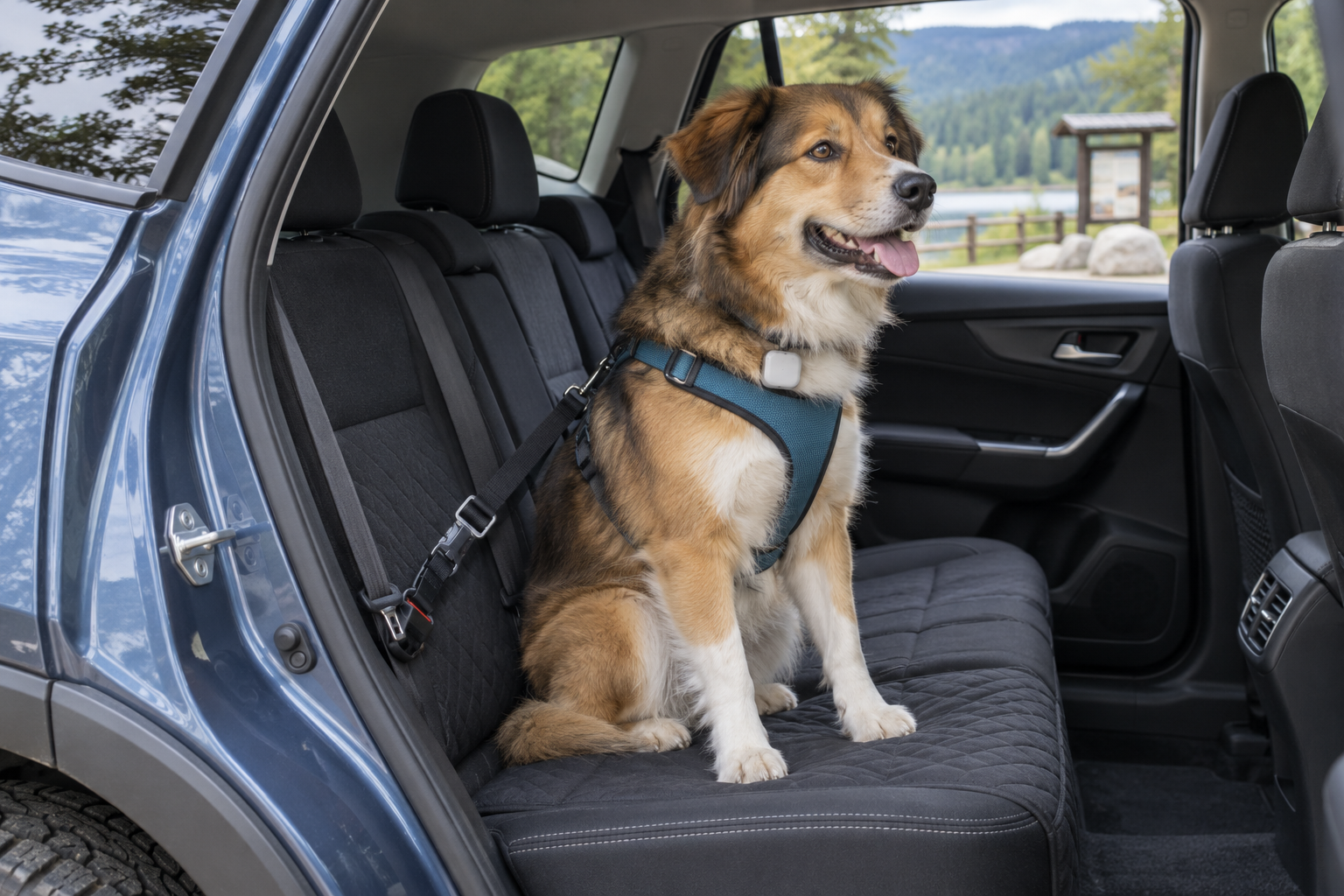
A GPS tracker is a recovery tool, not an invisible fence and not a substitute for tags or a registered microchip. Its real value is the ability to alert you when a dog leaves a designated area and then provide recent locations while you search. The tradeoff is ongoing: most mainstream trackers need cellular service, a paid plan, a charged battery, and a phone connection.
The short version
- Best for frequent live-location checks: Tractive DOG 6. Straightforward live tracking and power-saving zones make it a practical general-purpose choice.
- Best for long stretches between charges: Fi Series 3+. The brand emphasizes extended battery life, a durable collar format, and safe-zone alerts.
- Best for trail and field routines: Garmin Alpha LTE. It is a more specialized option for sporting-dog owners and can work alone through LTE or alongside a compatible Garmin VHF system.
How we chose
We compared current manufacturer documentation for coverage, update behavior, waterproof rating, expected battery use, charging, dog-size limits, and subscription requirements. Battery figures are not directly comparable because update frequency, signal strength, movement, and time inside a home Wi-Fi or power-saving zone can change runtime substantially.
Our three picks
Tractive DOG 6: best for frequent live-location checks
Tractive’s DOG 6 supports live GPS tracking, virtual fences, and location history. The company’s current help documentation estimates up to about 14 days of battery life when a tracker spends substantial time in a power-saving zone and up to about six days without one. Charging takes roughly two hours.
Best for: owners who want an approachable app and expect to use live mode during a search. Watch-outs: the long estimate depends on a favorable routine. A roaming dog, weak cellular coverage, and frequent live tracking will drain the battery more quickly. A subscription is required.
Best for frequent live-location checks
Tractive DOG 6 GPS Tracker
Best for: Owners who want approachable live tracking, virtual fences, and location history for an everyday dog collar.
Why it made the guide
- Supports live GPS tracking and virtual-fence alerts.
- Power-saving zones can extend time between charges in a favorable routine.
- Location history supports review after an outing or escape.
Pros
- Straightforward live-location focus.
- Virtual-fence notifications.
- Rechargeable tracker that attaches to a collar.
Cons
- Requires a subscription.
- Weak coverage and frequent live tracking reduce battery life.
Fi Series 3+: best for long stretches between charges
Fi integrates its tracker into a collar and combines location, safe-zone notifications, and activity data. The Series 3+ is rated IP68 and IP66K by the manufacturer. Fi advertises battery life of up to three months under favorable conditions, a figure tied to normal use and time connected to Wi-Fi or a base.
Best for: owners who dislike weekly charging and want a collar-based system. Watch-outs: “up to” is important. Escape events, poor signal, and active GPS use shorten runtime. Most location and activity functions depend on an active membership.
Garmin Alpha LTE: best for trail and field routines
Garmin’s Alpha LTE attaches to an existing collar and sends location through the Alpha smartphone app when compatible LTE coverage is available. It is aimed at sporting-dog and field use rather than casual activity tracking. Owners who already use a compatible Garmin VHF dog-tracking system can combine the two signal types in the same Garmin setup instead of treating LTE as the only recovery path.
Best for: trail, hunting, and field routines where a rugged tracker and optional Garmin-system integration justify the extra complexity. Watch-outs: standalone tracking still needs LTE service and a subscription. Garmin’s published estimate is up to 18 hours at the fastest update rate and up to 75 hours at a slower interval, so this is a charge-before-each-outing device rather than a set-it-and-forget-it collar. VHF redundancy requires additional compatible hardware.
At-a-glance comparison
| Tracker | Service model | Published battery approach | Important limit |
|---|---|---|---|
| Tractive DOG 6 | Cellular subscription | Up to 14 days with power-saving use | Live mode and weak signal drain faster |
| Fi Series 3+ | Membership | Up to three months in favorable use | Runtime depends heavily on home connections |
| Garmin Alpha LTE | LTE subscription; optional Garmin VHF integration | Up to 18 hours at the fastest update rate or 75 hours at a slower interval | Specialized field device; VHF backup needs extra hardware |
Coverage comes before features
Cellular GPS trackers need a view of the sky for location and a supported cellular network to send that location to you. Dense buildings, canyons, heavy tree cover, and coverage gaps can delay updates. Check each provider’s current coverage for your home, routine walking area, and travel destination before choosing by battery life or app design.
Build a complete recovery plan
- Keep a visible ID tag with a current phone number on the collar.
- Microchip the dog and keep the registry details current.
- Charge on a schedule rather than waiting for a trip.
- Test safe-zone alerts before you need them.
- Save a clear, recent photo of the dog on your phone.
- For remote hunting or backcountry work beyond cellular coverage, investigate dedicated radio/GPS systems instead of assuming an LTE tracker will work.
Frequently asked questions
Does a GPS tracker work without cell service?
The device may obtain a GPS position, but a cellular model usually cannot send that position to your phone without supported network coverage. Dedicated radio systems are a different category.
Can a tracker replace a microchip?
No. A tracker can fall off or lose power. A microchip is a permanent identifier that a shelter or veterinary clinic can scan, although it does not provide live location.
Are safe-zone alerts instant?
Not necessarily. Detection and delivery depend on the device’s check-in interval, GPS accuracy, connectivity, and app notifications. Test the boundary and leave a buffer around doors, gates, and property lines.
The bottom line
Choose Tractive for approachable live tracking, Fi when charging frequency is the recurring annoyance, and Garmin Alpha LTE when trail or field use makes a specialized system worthwhile. Before committing to any of them, verify coverage where your dog actually goes and decide who will keep the battery charged.
For the vehicle side of the trip, see our comparison of dog car harnesses.